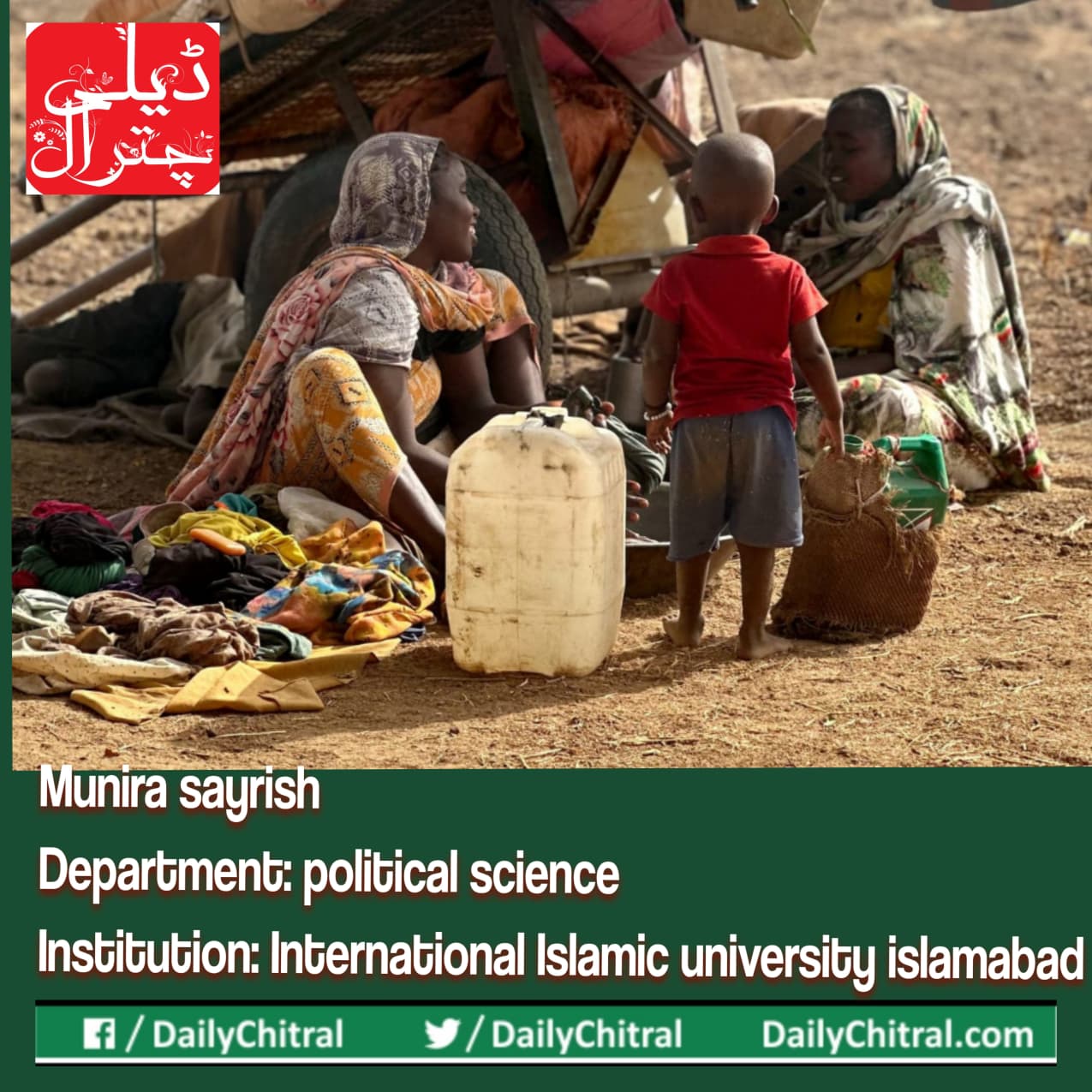
At the center of Africa, a country is disintegrating as the world watches. Millions of Sudanese civilians—including families, children, and the elderly—are caught in a vicious conflict that has displaced more than 13 million individuals and resulted in thousands of deaths. Beyond Sudan’s borders, however, global attention has largely faded. Media coverage shifts elsewhere, governments issue restrained declarations, and international bodies find it difficult to turn appeals into meaningful intervention. Such silence does not signify neutrality; it constitutes a form of collaboration. Each postponement and each expression of apathy strengthens armed groups, intensifies ethnic strife, and permits famine and illness to devastate populations. To uphold the pledge of “never again,” the international community must urgently address the crisis in Sudan. Neglecting it endangers not only Sudan’s stability but also the moral standing of the global order.
The conflict in Sudan began in April 2023, when the Sudanese Armed Forces (SAF) clashed with the paramilitary Rapid Support Forces (RSF), throwing the nation into turmoil. Fighting rapidly extended throughout Khartoum, Darfur, and other areas, forcing millions from their homes and demolishing residences, medical facilities, and educational institutions. Ethnic-based assaults and indiscriminate violence against non-combatants have prompted warnings of potential genocide. Although the United Nations and aid groups have repeatedly sounded the alarm, international involvement has been limited. With Sudan nearing catastrophe, global inaction has permitted brutality and distress to intensify without restraint.
This global silence is particularly perilous because it is not passive—it actively facilitates the horror unfolding in Sudan. Despite numerous alerts and growing proof of systematic atrocities, the principal international institutions tasked with safeguarding human rights have largely neglected their duties. In 2025, the United Nations initiated a substantial humanitarian appeal to assist millions of displaced and starving Sudanese. Nevertheless, even as UN agencies implore member states to contribute, funding remains critically insufficient, and pledges have not resulted in effective civilian protection. Human Rights Watch has openly condemned this international lapse, labeling it a “marred global failure to protect civilians. This inertia is worsened by the conduct of regional and external actors whose tacit support intensifies the violence. As the SAF and RSF persist in targeting civilians, both factions are allegedly receiving arms and backing from external sources, rendering the conflict more lethal and entrenched. Meanwhile, global leaders employ diplomatic language, yet genuine political determination to enforce arms embargoes or substantial sanctions has been lacking. This calculated ambiguity enables militias such as the RSF to act without consequence, perpetrating mass killings, extrajudicial executions, and other brutalities, particularly against ethnic minorities like the Fur, Masalit, and Zaghawa.
Compounding the situation is a humanitarian disaster perpetuated by this silence. The United Nations has recorded a sharp increase in ethnic violence, summary executions, and intentional assaults on civilian infrastructure, including medical centers, markets, and aid convoys. Methods such as starvation—deliberately depriving populations of food, medicine, and relief—are not accidental but calculated tactics of warfare. At the same time, leading aid organizations report that they are operating with dwindling resources: supplies are scarce, access is obstructed, and financial shortfalls jeopardize their capacity to assist the most vulnerable. The world’s failure to react decisively is not merely an ethical shortcoming—it is complicity in a genocidal campaign.
Global silence is not impartial; it actively aggravates Sudan’s crisis. Each deferred intervention enables militias to strengthen their control, commit atrocities, and conduct ethnic cleansing without repercussion. Unchecked aggression is provoking regional instability, driving millions of refugees into adjacent nations, and creating conditions conducive to extremist factions. Famine, disease, and assaults on hospitals and schools are escalating, while humanitarian assistance struggles to reach those in dire need. Beyond Sudan, the international community risks normalizing indifference in the face of genocide, undermining the credibility of global institutions and the principle of civilian protection. Today’s apathy may lead to tomorrow’s calamity.
The destruction in Sudan is profound, yet it is not beyond repair. The world retains the capacity to intercede—if it decides to do so. The most immediate priority is to implement a meaningful ceasefire, supported by the United Nations and the African Union. Diplomatic rhetoric is no longer sufficient; Sudan requires pressure, accountability, and coordinated international measures. Nations providing arms or financial assistance to the warring factions must be subjected to targeted sanctions, and a comprehensive global arms embargo should be imposed without delay. Equally critical is the reopening and safeguarding of humanitarian routes. Aid agencies cannot preserve lives if access is denied, yet relief shipments are routinely blocked, attacked, or delayed. Donor countries must fully finance the UN’s humanitarian appeal, ensuring that organizations such as the World Food Programme, UNICEF, and Médecins Sans Frontières possess the means to avert famine and treat casualties. Regional powers must also assume greater responsibility. Neighboring states possess economic, political, and strategic influence that can encourage both the RSF and SAF to engage in negotiations. Silence, neutrality, or geopolitical maneuvering is unacceptable. Sudan’s collapse would destabilize the entire region. It is time for international actors to abandon diplomatic evasion and accept accountability.
Sudan stands on the brink of an abyss, and each day of inaction brings it nearer to irreversible ruin. The world cannot plead ignorance—the evidence is abundant, the warnings clear. What is absent is the resolve to act. If the vow of “never again” is to hold any meaning, it must extend to Sudan as it does to any other place where innocent lives are endangered. The world’s silence is not merely permitting a genocide to occur—it is hastening it. Unless global leaders, institutions, and ordinary people refuse to turn away, Sudan’s agony will become another entry in humanity’s chronicle of ethical collapse. The remaining question is stark: will the world end its silence, or will it allow Sudan to descend into darkness alone?